
Autism in High Functioning Adults: Why So Many People Get Diagnosed in Their Thirties and Forties
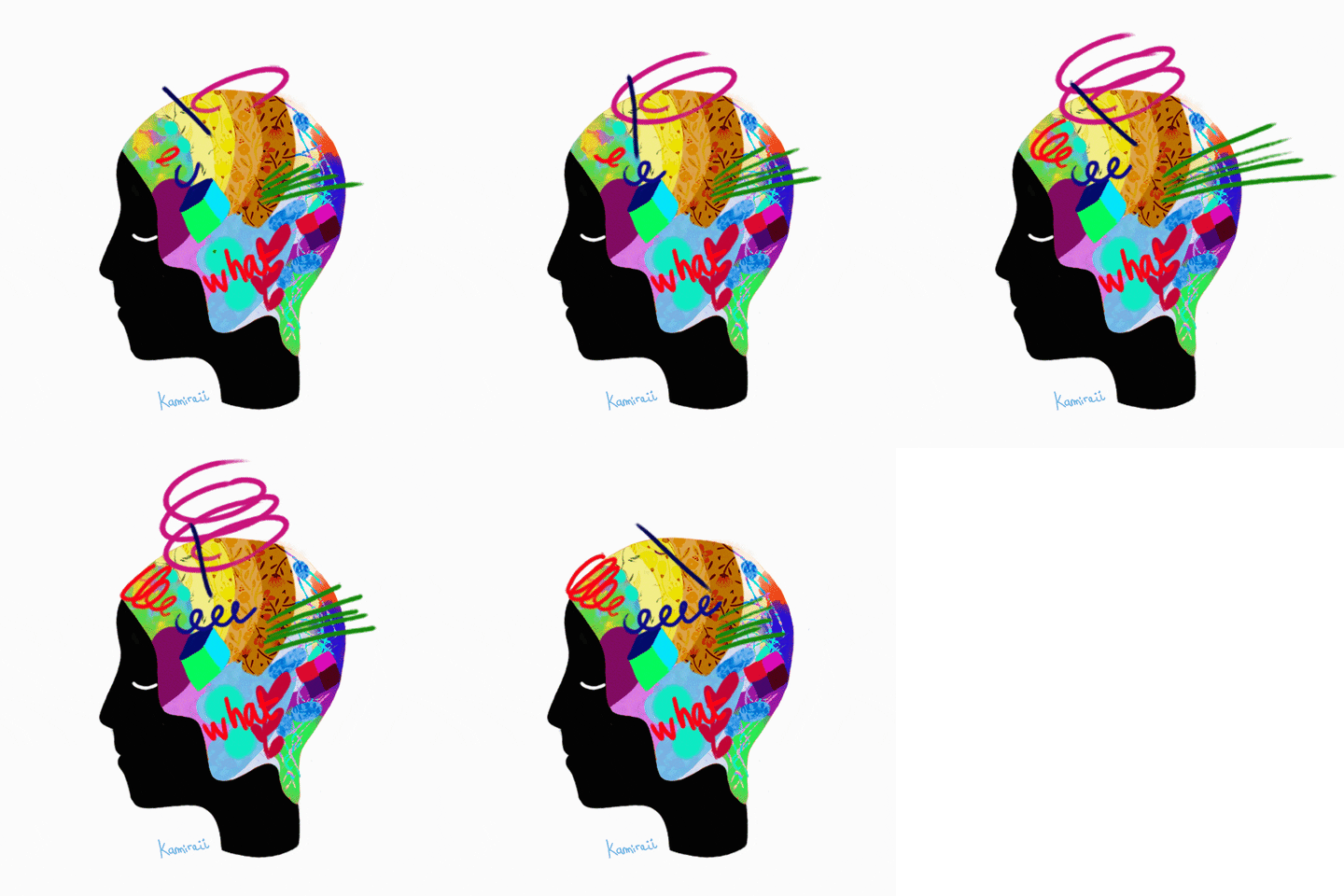
If you’ve spent decades wondering why the world felt slightly harder to navigate than it seemed to for everyone else, you’re not imagining it, and you’re not alone. Across the country, adults in their 30s, 40s, and beyond are receiving autism diagnoses for the first time, finally finding a word to put to their lifetime of experiences that never quite fit any other explanation. An increase in autism diagnoses among older adults is primarily driven by broader diagnostic criteria , higher public awareness, and the recognition of “masking.”
Earlier criteria focused heavily on young boys with severe or obvious communication and social challenges. This was because that was the cultural image of autism at the time which bears little resemblance to how autism presents in adults who’ve developed extensive masking skills. Many autistic adults are highly verbal, hold steady employment, maintain relationships, and appear to function well by external measures – although their internal experience is a different story.
In the current day, autism is recognised on a broader spectrum with the DSM-5 combining separate conditions like Asperger’s syndrome into a single Autism Spectrum Disorder (ASD), capturing subtler presentations.
A late autism diagnosis is more common than many people realize. According to SPARK for Autism, about half of autistic adults in the large-scale research study were diagnosed after age 17, with many receiving their diagnosis in their 30s and beyond. Many adults – especially women – spent decades masking by forcing eye contact that feels unnatural, mimicking facial expressions and social behaviors, or rehearsing social scripts. Masking can make autism effectively invisible to outsiders and sometimes even to the person themselves. Research shows that making is directly linked to later ages of diagnosis, with females diagnosed later than males on average. As we grow up, we face heavier life demands like careers, parenting, and managing a household. Masking strategies often break down under the strain leading to burnout, exhaustion, anxiety, and a search for answers.
Awareness of autism has risen with online representation via blogs and media. More adults see hints of themselves on the screen which leads to more adults seeking answers and wanting to make sense of the things they’ve wondered about for years. While online quizzes can help with a self-diagnosis, they are not comparable to a formal one by a qualified clinician. This is important since autism can be easily misdiagnosed as anxiety, depression, borderline personality disorder (BPD), or more. Adults may pursue a diagnosis for a variety of reasons including: curiosity, self-understanding, or long-standing questions about how they relate to the world.
Some Misdiagnoses and Why They Happen
One of the most striking aspects of a late autism diagnosis is what typically comes before it. Most autistic adults who receive a diagnosis in midlife or later have already spent years collecting other labels such as anxiety disorders, depression, or personality disorders.
The anxiety-autism link is particularly notable; anxiety and social difficulties are often the presenting symptoms that bring autistic adults to mental health services in the first place, but without autism-specific assessment, the underlying neurology goes undetected.
For autistic women, research shows misdiagnosis with BPD is especially common. Characteristics like emotional dysregulation, identity confusion, and intense interpersonal experiences are frequently interpreted as BPD traits rather than autistic.
A late autism diagnosis typically follows a long, exhausting road of other explanations that never truly fit. If that sounds familiar, a comprehensive evaluation can finally give you an accurate picture of your neurology.
Signs You May Have Autism
You often mask to protect yourself from harassment by suppressing your natural behaviors in order to appear more “normal.” This may look like temporary reduction in repetitive movements (stimming) or faking emotions during a social interaction. While masking can be effective for the short-term, in the long-term, it becomes exhausting and can be traumatic, leading to burnout and social exhaustion.
In social situations:
Conversations feel effortful in a way they don’t seem for others
Social rules feel like something you learned intellectually, not naturally
You find yourself exhausted by social interactions others seem to energize from
Small talk feels confusing or pointless; deep-topic conversations feel natural
You often miss unspoken cues or realize after the fact how something was meant.
In sensory experience:
Certain sounds, textures, lights, or smells are unusually intense or distressing.
You’ve developed workarounds for sensory situations that others don’t notice
Environments that are busy or unpredictable are genuinely draining
In how you think:
You have areas of deep, sustained interest that feel fundamentally different from casual hobbies (hyperfixations)
You prefer routines and find unexpected changes genuinely discombobulating
You tend to think in very concrete, systematic, or literal ways
In looking back:
You’ve spent your life feeling like you were performing normalcy rather than living it
You often felt “other”or different without being able to articulate why
You were described as “too sensitive,” “too intense,” or “in your own world”
Now, this is not a diagnostic checklist. It is a doorway to self-reflection. The only way to know for certain is through a comprehensive evaluation with a licensed clinician who specializes in adult autism assessment.
If you’re looking for a diagnosis, you have options here at BSW. Dr. Chanel Thomas DNP, APRN, FNP-BC, PMHNP-BC is licensed and trained in dealing with autism within adults.
Why You May Benefit from Testing
This is a question some adults ask themselves, and it’s a fair one. If you’ve already built a lift and developed your own coping strategies, is a formal diagnosis/treatment still worth it? Research and experiences of late-diagnosed adults suggest yes.
Accommodation access: Whether you’re still in the workforce or in an educational program, a formal autism diagnosis and comprehensive report provides the documentation needed to request workplace adjustments or academic accommodations that can meaningfully change your daily experience.
More effective mental health support: Understanding your neurology allows therapists and psychiatrists to tailor their approach which can help you advocate for what you actually need.
Insurance and healthcare navigation: A diagnosis opens access to services and supports that may otherwise be unavailable or require significant self-advocacy without documentation.
Self-compassion: For many, the most profound shift isn’t practical; it’s internal. Understanding that decades of difficulty weren’t personal failures, but the natural result of navigating a world not designed with them in mind, is genuinely groundbreaking.
Whether you’re newly exploring a diagnosis or seeking a second opinion, we at Blue Sage Wellness approach each evaluation with empathy, cultural humility, and curiosity rather than clinical coldness.


Comments